 Dog Breeds
Physical Characteristics Of American Pit Bull Terrier Puppies
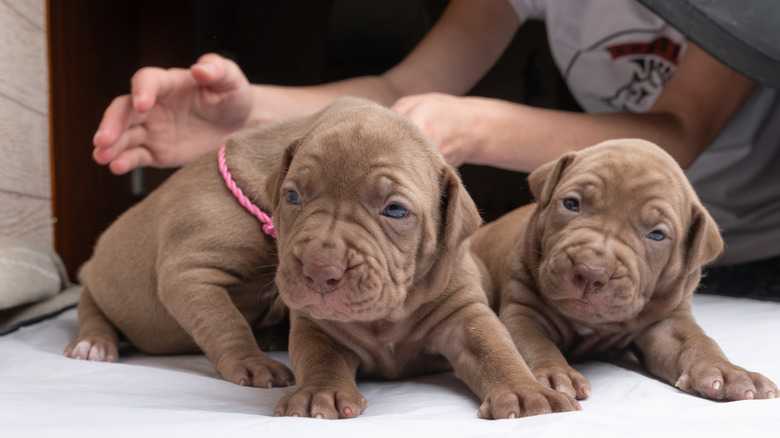
DogsDog BreedsPhysical Characteristics Of American Pit Bull Terrier PuppiesBySherri TelenkoUpdated: Dec. 5, 2024 5:40 pm ESTshymar27/ShutterstockPit bulls are extremely misunderstood dogs who are heavily defended. Few dogs are as controversial thanks to negative associations, yet few dogs have as ardent a fan base. First, the term "pit bull' is often incorrectly used. There aren't pit bull breeds per se. Second, pit bull physical characteristics are similar to bulldogs and some terriers.People often use the term "pit bull" when referring to several breeds of terriers: American Staffordshire terriers, Staffordshire bull terriers, and bull terriers as well as American pit bull terriers. A square head, a broad chest, a well-defined neck, and a shiny coat are some American pit bull puppy characteristics.Pit bull puppy characteristics: square headEven as a puppy, the head of the American pit bull terrier is square. Pit bull puppies have loose skin around their heads, making their heads look wrinkled. As they grow, the wrinkled skin stretches out over the broad cheeks and thick neck. The pointed ears fall forward and remain that way unless they are cropped.Many pit bulls have faces that are white with light brown or chocolate brown circles around one or both eyes (think Petey and Pal from "The Little Rascals"). Some pit bull faces are dark brown with a white stripe starting between the eyes and stretching down the nose. Colors of these dogs vary and are similar to bulldogs, terriers, and associated pit bull breeds.Pit bull puppy characteristics: sturdy bodyPit bull puppies are about 7 to 10 ounces and 8 to 10 inches long at birth. However, they grow to be 30 to 85 pounds and 17 to 19 inches tall at the shoulder by adulthood. Puppies have short legs and a medium-length tail that tapers to a point, which is sometimes one of the characteristics used to define the breed. Pit bulls also have larger chests and broader shoulders than most other puppies of the same size.Pit bull puppies grow most rapidly between the ages of 4 and 9 months and should reach their full height by 18 months. After 1 year old, the pit bull puppy begins to fill out his sturdy muscular body. At this age, an American pit bull terrier is still a puppy at heart but has likely reached his adult size. Final size, of course, depends on a number of factors including genetics, exercise, and quality of diet.Pit bull puppy characteristics: shiny coatAlthough their coats are thick, American pit bull puppies' hair is extremely shiny and comes in a wide range of colors. Puppies can have coats that are one, two, or three colors, ranging from tan, brown, and "blue" to brindle. The coat remains thick and shiny into the dog's adulthood and is easy to groom.Pit bulls do shed, but you'll rarely find large clumps of hair balls. They require minimal brushing and the occasional bath. In between baths, they should be wiped down with a damp cloth to keep the coat shiny.Pit bull puppy characteristics: wide mouthThe strong American pit bull terrier jaw is a characteristic of the breed. The dog's ability to "lock" the jaw is a myth, but pit bulls can grab and hold on with determination. Unfortunately, misunderstanding about what the jaws can and cannot do is reasoning for breed-specific legislation in many regions.While the strong jaw is a source of misunderstanding about the pit bull's character, ironically, it's the pit bull mouth shape that gives the dog its charm. When open, this wide mouth looks like a clown-like grin, disarming some negative first impressions.ReferencesAmerican Kennel Club: American Staffordshire Terrier History: How the AmStaff Separated From the "Pit Bull"DogTime: American Pit Bull Terrier
 Dog Breeds
How To Tell What A Lab Is Mixed With
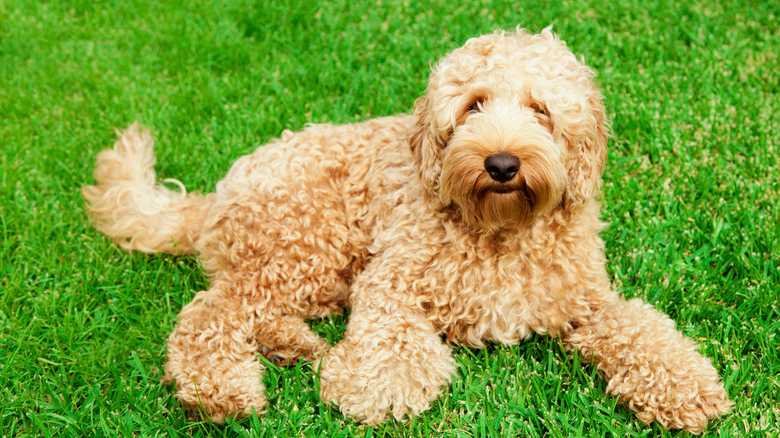
DogsDog BreedsHow To Tell What A Lab Is Mixed WithByCuteness TeamUpdated: Dec. 3, 2024 5:22 pm ESTzstockphotos/iStock/GettyImagesThe Labrador retriever has been a mainstay on the American Kennel Club's most registered dog for years, so it's no surprise that there are so many lab mixes in the world. Some lab mixes are by design, such as when crossed with a poodle to make a labradoodle, while others are happy accidents. Your observation skills can help you guess what your lab is mixed with, or you can use a scientific test to learn for sure, or even learn more if you are interested in how to breed Labradors.Labrador original breed appearanceThe Labrador retriever comes in three coat colors:Black.Yellow.Chocolate.According to the AKC breed standard, the Labrador's dense, short, and straight coat is one of his distinctive features. He's a medium-size dog, standing between 21.5-and-24.5 inches tall, and weighing between 55-and-80 pounds. He has an athletic build and wide head with brown or hazel eyes, depending on his coat color.Labrador temperamentThe Labrador retriever is an intelligent, engaging dog who loves to be with her family, which may explain her enduring popularity. As an active dog, she enjoys participating in an array of activities, such as swimming, hiking, and jogging, and she won't mind working either. Labradors are known for their hunting, search and rescue, and sniffer-dog skills. She is an eager-to-please dog who responds very well to training.Lab mix behavioral cluesIf you pay close attention to your Lab mix's behavior, you might be able to gauge what type of dog he is. Dogs are often bred for certain behavioral traits. For example, herding dogs are bred for their ability to protect and move other animals, which often manifests in their day-to-day behavior and personality. Dog types and their behavior characteristics include:Protectiondogs are usually dominant, confident, and responsive to training.Herdingdogs tend to be dominant, demanding, sensitive, and anxious; with proper training, they're very obedient.Flockingdogs typically are confident, independent, tolerant, and protective and work well with people.Retrieversare often mouthy, energetic, happy dogs who excel in obedience.Scent houndstend to be loving, sweet-natured dogs who often wander because they follow their noses.Sighthoundsaren't unintelligent but usually are not too interested in pleasing their masters. They tend to be reserved and quiet when they're not giving chase.Terriersare independent, fun, and sometimes predatory because they are bred to chase prey.Spanielswere bred for hunting and used to flush game. Often, they're happy, energetic dogs who love to fetch.Pointersandsettersare usually high-energy dogs who often possess sweet dispositions, though it can be challenging to teach them obedience.Northern breedswere often working dogs, pulling sleds and cargo. Usually, they have a strong prey drive and independent nature that leads them to wander.Fightingdogs were historically bred for aggressive purposes. Some dogs in this group may hold on to their aggressive tendencies. However, they're often affectionate, devoted dogs, though they also can be focused and prey-driven.Companionandtoydogs such as Dalmatians, bulldogs, and Chihuahuas will have characteristics associated with their specific breeds.Watch your dog's behavior and note any behavior patterns. For instance, whether he's always sniffing and following a scent trail or is more interested in chasing squirrels. Understanding his personality traits will help you gauge what other breeds may be part of his genetic makeup.Labrador mix physical cluesPay attention to your dog's appearance and note any identifying features, such as:Ears:floppy or erect, rounded, or pointed.Tail:short, stubby, long, thin, wide, or bushy.Feet: more webbed or less webbed.Head:face, muzzle, eyes, and head shape.Coat:color, patterns, and hair type.If your dog has the classic Lab coat but pointy ears, you can start considering dog breeds with prick ears, such as the German shepherd. A curly or wiry coat may indicate poodle genes. Size matters, too; a larger or smaller than normal Labrador mix can indicate the size of one of the parents.DNA tests to determine breedYou can learn your dog's heritage by paying to have a deoxyribonucleic acid or DNA test done on your dog. Available online, many tests require a simple cheek swab from your dog, which is sent in to be analyzed against a database of a wide variety of dog breeds. If you choose to go with a DNA test, keep in mind that the more breeds the company offers in its database, the greater the odds of an accurate reading. Generally, the fewer the number of breeds in the dog, the greater the chance of identifying all of the dog's breeds.
 Dog Breeds
The 5 Most Expensive Dog Breeds In The World
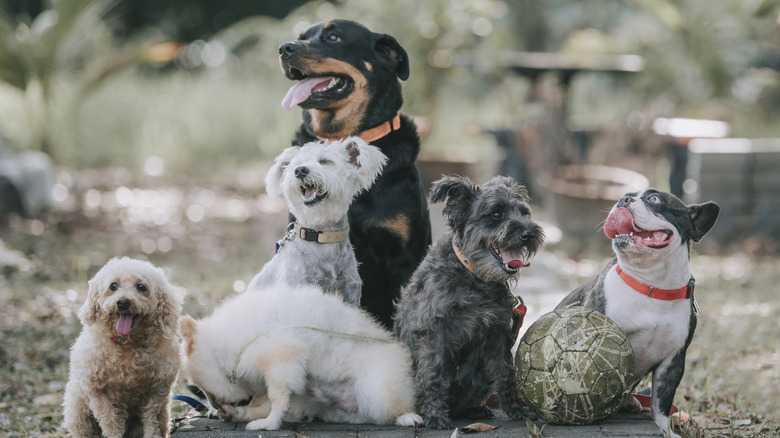
DogsDog BreedsThe 5 Most Expensive Dog Breeds In The WorldBySanaphay RattanavongUpdated: Dec. 4, 2024 11:23 am ESTEdwin Tan/Getty ImagesOwning a dog comes with significant financial commitments, particularly for some of the world's most expensive breeds. These costs can be influenced by various factors, including adoption or breeder fees, which, depending on the breed, and purebred status, can run north of $4,000. Popular breeds in high demand often have premium prices that reflect their desirability. Those who have a history of winning at award competitions, for instance, may come at a higher ticket than those who do not. Other breeds cost more money based on specific health needs. Larger breeds often require more expensive diagnostic tests and care. Dogs from poor breeding may have hereditary health issues, leading to costly medical needs. Working breeds need extensive training to stay mentally stimulated, adding to expenses. Some breeds are prone to hereditary conditions requiring surgery, and large dogs with high grooming needs further increase costs. Knowing how to read a dog's pedigree can help you better understand why those prices exists. And your puppy budget doesn't necessarily end there: Aside from what Halloween costume you may want to fit your dog with, significant optional costs may come into play, such as pet insurance and training classes. Understanding the financial impact of these breeds can help you plan for the lifelong care of your pets. However, there are certain luxury breeds that are guaranteed to cost a premium price, no matter how frugal you are.Mastiff appealTkachuk Alexandr/ShutterstockThe Tibetan mastiff is widely regarded as the most expensive dog breed in the world, with prices that can reach millions of dollars. This extraordinary cost is driven by several key factors, including the breed's rarity, especially outside of its native regions, and its status symbol among the wealthy elite, particularly in China. One of the most notable examples of its value occurred in 2014, when a Tibetan mastiff puppy was sold to a Chinese businessman for a staggering $1.95 million, setting a world record.Beyond its rarity, the Tibetan mastiff's lion-like appearance and the challenges associated with breeding contribute to its high price. Breeding these dogs is difficult, often resulting in small litters, which increases their exclusivity and value. Additionally, their large size demands significant maintenance, from grooming to food expenses, making ownership a costly long-term commitment.The price of healthy and well-tempered Tibetan mastiffs can vary widely, from around $2,000 for a standard puppy to the extraordinary sums seen in elite circles. Breeders with a reputation for producing healthy, well-bred dogs and those with champion pedigrees also contribute to the high price tag.Bullish on English bulldogsAnton Pentegov/ShutterstockThe English bulldog is known for its charming, low-key demeanor and its distinct wrinkled old-man face, making it a popular and beloved breed. However, owning one comes with significant financial commitments due to their predisposition to various health problems. On average, an English bulldog costs around $4,250, but costs can increase substantially when factoring in veterinary care.Their brachycephalic (flat-faced) structure can lead to serious breathing difficulties, often requiring costly interventions. Additionally, English bulldogs are prone to hip dysplasia, which may necessitate surgery or ongoing medication. These health concerns, along with the reputation of the breeder and potential basic training services, contribute to the high cost of owning an English bulldog. Despite these expenses, their popularity continues to grow, especially after a bulldog named Thor won "Best in Show" at the 2019 National Dog Show.Fancy French bulldogsTatiana Buzmakova/ShutterstockFrench bulldogs are consistently ranked among the more expensive dog breeds, with prices often exceeding $3,000 from reputable breeders. In 2024, NPR reported that this was due to surges in the breeds popularity further driving up their cost. Known for their playful, affectionate personalities and quiet demeanor — often limited to snorts and snores — French bulldogs have become beloved companions, particularly for families with children.However, like their English bulldog counterparts, French bulldogs are prone to several health issues that can lead to significant veterinary expenses. Their brachycephalic features often result in breathing difficulties, requiring costly interventions. Additionally, they are susceptible to hip dysplasia, a condition that may require expensive surgery and ongoing care. These factors impact the French Bulldog's average life span.While their grooming needs are relatively low, their wrinkles need regular cleaning to avoid skin problems, adding to the cost of ownership. Despite these concerns, their endearing temperament makes them a highly sought-after breed.The smiling SamoyedZanna Pesnina/ShutterstockThe Samoyed is a strikingly beautiful and cheerful breed, often recognized for its signature bright "smiling" face. However, owning one comes with a hefty price tag. Typically costing between $2,000 and $5,000, Samoyeds rank among the priciest dog breeds. Their rarity, coupled with increasing popularity, drives demand and prices even higher. Breeding challenges, such as small litter sizes, add to the limited availability of Samoyed puppies and increase their prices.Samoyeds are also prone to hereditary eye problems and hip dysplasia, leading to potentially significant veterinary expenses throughout their lives. Their thick double coat requires extensive grooming, which can be costly, especially for owners who opt for professional services. Despite these expenses, Samoyeds are adored for their friendly temperament and are known to be affectionate with people of all ages. However, they require ample exercise and mental stimulation to prevent boredom, making them a demanding yet rewarding companion for dedicated owners.Little lion LöwchenCat Dana/ShutterstockThe Löwchen, a type of Maltese dog, is known for its lion-like appearance and cheerful temperament. One of the most expensive dog breeds in the world, their adoption prices range from $4,000 to $8,000. That hefty price point is due to their rarity.In the 1970s, only 65 known Löwchens remained globally. This vulnerability, coupled with their long European heritage, significantly contributes to their high cost and desirability among enthusiasts. According to CNN, in 1976, one Löwchen sold for what would be the modern day equivalent of $53,000 U.S. dollars.In addition to their rarity, Löwchens require regular grooming to maintain their distinctive look. Their non-shedding coat demands frequent brushing and monthly trims. Over time, such maintenance expenses can add up. Despite these costs, Löwchens are known for their good health and longevity, making them a valuable companion for families. Their playful, yet calm demeanor makes them excellent pets, especially around children. Prospective owners should carefully consider the financial commitment involved, particularly for grooming, when choosing to bring home this rare and historically significant breed.
 Dog Breeds
Dog Breeds With Black Mouths
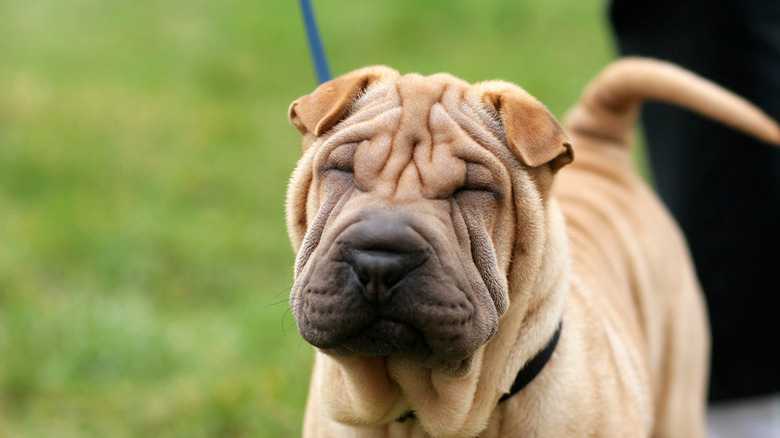
DogsDog BreedsDog Breeds With Black MouthsByKrissy HowardUpdated: Dec. 9, 2024 4:25 pm ESTs5iztok/iStock/GettyImagesWhen many people think of a dog's tongue hanging out of his mouth, they most likely picture a hairless, pink spot on an otherwise furry face. Some dogs, however, have tongues that reflect a darker hue that's a black or blue-black shade. Additionally, both purebred and mixed dogs may bear pink tongues with dark spots. Like any other physical trait in a dog, mouth color can tell you a lot about what breed your dog is, or may be mixed with.Dog breeds with black mouthsWhen a dog has a black or dark blue tongue, it simply means that the tongue is pigmented in a way that's different from the traditional pink coloring. This unique trait is the result of selective breeding, much like facial shape or temperament characteristics. As for breeds that have blue-black tongues, the chow chow and the Chinese shar-pei are some of the most notable, as this is the official breed standard, according to the American Kennel Club. VCA Hospitals states that both chow chows and Chinese shar-peis are ancient dog breeds that originate from the same area of the world, and also have black noses (although light-coated shar-peis may have lighter noses,) and small, dark eyes.Other dogs have blue-black pigmentation in different parts of their mouths, like the black mouth cur and the Saint Bernard. The black mouth cur is a herding dog that is commonly found in the North American south, and has a muzzle covered in black fur, usually in contrast to a tan or light brown coat. While these dogs aren't recognized by the AKC, they are recognized by the United Kennel Club, which states that their breed standard includes a darkly pigmented interior of the mouth, with the exception of the tongue.Variations of black pigmentWhile only a few breeds are known to have entirely black mouths, tongues, or gums, it is not uncommon to find canines with smatterings of blue-black pigment in otherwise pink mouths. Dog breeds known to have spotted tongues include the Airedale terrier, Akita, Australian cattle dog, Australian shepherd, Belgian sheepdog, Belgian Tervuren, Belgian Malinois, bichon frise, bouvier des Flandres, bull mastiff, cairn terrier, and the collie. Of course, mixed-breed dogs who have any of this ancestry in their genetic makeup may also be seen with spotted tongues, gums, or other parts of their mouths as well. While some canines with spotted tongues, gums, or mouths may have any of these breeds in their lineage, a spotted tongue is not necessarily an indicator of the presence of any breed — dark spots are merely deposits of dark pigment on the skin, mouths included.When to be concernedIt's not common, but sometimes, black spots on the tongue, mouth, or a dark coloring around the gums may indicate a dental disease. If your dog isn't one of those dog breeds with black gums or tongues and you notice spots you haven't seen before, it's best to consult your veterinarian as soon as possible. Merck Veterinary Manual lists endodontic disease, infected scrapes in the mouth, fungal stomatitis, and oral tumors as possible causes of discolorations inside of the mouth. Additionally, if you find that your dog's tongue and gums are suddenly blue or purple, she may have cyanosis, which results in a lack of oxygen in the body, and is often the symptom of an underlying medical issue, says VCA Hospitals.
 Dog Breeds
This Golden Retriever Letting A Baby Koala Ride On Her Back Will Brighten Your Day
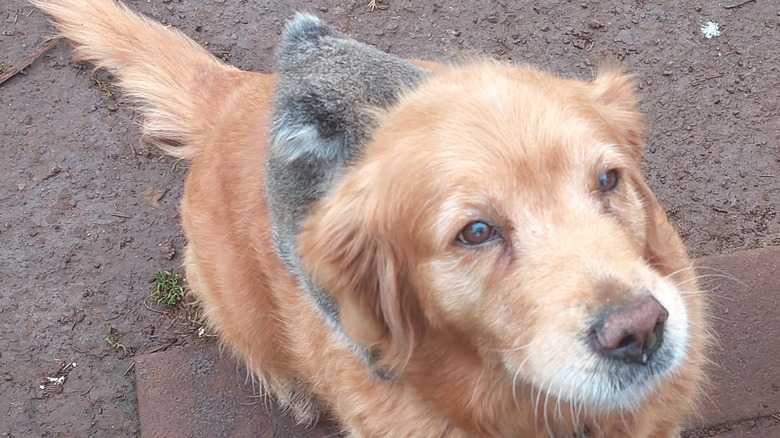
DogsThis Golden Retriever Letting A Baby Koala Ride On Her Back Will Brighten Your DayBySheri RadfordNov. 7, 2025 9:25 am ESTSteve Lamplough / FacebookIt's hard to imagine many things cuter than a baby koala — unless it's that same fuzzy little joey riding on the back of a happy golden retriever. That's exactly what a resident of Bolwarra, Australia, discovered in September 2025. "Heard the dogs barking and went outside and called them, and Denni came running up to me with this on her back, both as happy as Larry," Steve Lamplough wrote on his community notice board's Facebook feed alongside adorable photos of the unlikely animal duo.Steve Lamplough / FacebookCommenters loved the photos. Tine Brok commented, "Aawww koala climbed the first warm furry body to come near lol." Suzie McGee joked, "It followed me home, Dad, please can I keep him?" One punster commented that Denni the golden retriever is clearly "an officially recognized and koala-fied carer."The joey seemed completely comfortable riding on 9-year-old Denni, which perhaps shouldn't be surprising considering that a joey will often cling to its mother's back from about the age of 7 months, after emerging from the mother's pouch. It was a sight Lamplough had never seen before, despite having a large manna gum tree on his property that often attracts koalas. "It was quite amazing to see," he told the Australian Broadcasting Corporation. Fortunately, Lamplough was able to gently remove the joey and place it back in a tree, where its mother found it about 15 minutes later. Neither the koalas nor the golden retriever suffered any ill effects from the encounter.Why even koalas loves golden retrieversSteve Lamplough / FacebookMany comments on the Facebook post mentioned how kind, sweet, and loving golden retrievers are. Sue Merryfull wrote, "This happened with our golden retriever many years ago. They are such a gentle breed, I think the Koala must know they are safe with them." Goldens are considered to be one of the dog breeds with the best temperament and also one of the most emotionally intelligent dog breeds, frequently used as emotional support dogs. These social dogs are great with kids, making them a good choice for families, and they tend to get along well with other animals. Their friendly faces and eagerly wagging tails often make passersby stop to say hello, and most of them adore being petted by anyone and everyone.Steve Lamplough described Denni in his interview as friendly and loving. "When she had pups, she was a fantastic mother," he said. "Maybe that is why she accepted the baby koala." For more feel-good stories, check out these moments of animal affection that will melt your heart and these sassy animals who will make you laugh.
 Dog Breeds
What Age Was The Oldest Dog In The History Of The World?
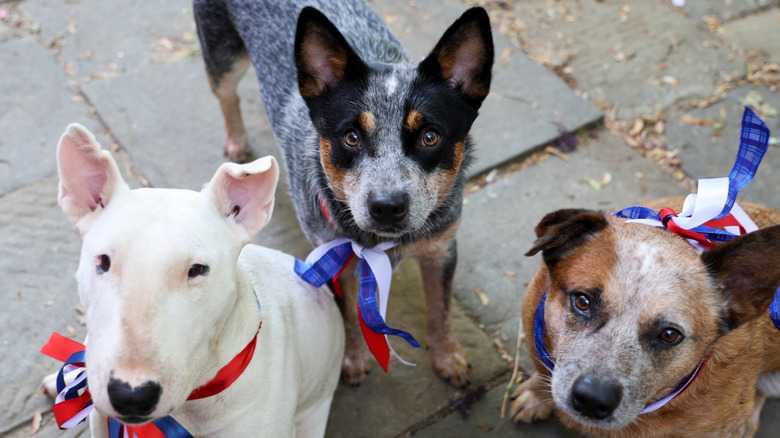
DogsDog BreedsWhat Age Was The Oldest Dog In The History Of The World?BySanaphay RattanavongMarch 25, 2025 1:25 pm ESTChiara Benelli/Getty ImagesDogs have been our beloved companions for thousands of years, and we all wish they could live forever. While most dogs live between 10 and 13 years, some have pushed that boundary even further, shattering records for the oldest dog alive. This record is currently held by Bluey — not to be confused with the popular Australian kids' show— an Australian cattle dog from Victoria, Australia. Australian cattle dogs are smaller, with a lifespan of about 12 to 16 years. Bluey shattered these records by living an astonishing 29 years and 5 months.Born in 1910, Bluey spent two decades working as a cattle and sheep dog before retiring at age 20. An active lifestyle, nutritious diet, and genetic factors may have contributed to his extraordinary longevity. For nearly a century, Bluey held the Guinness World Record as the oldest verified dog in history. However, in 2023, another dog — Bobi, a Portuguese Rafeiro do Alentejo — briefly claimed the title. This sparked controversy, as experts questioned the validity of Bobi's reported age. Guinness eventually revoked Bobi's record, reaffirming Bluey's place in history. By examining Bluey's life, we can guess at why some breeds are the longest-living dogs out there.The secrets behind Bluey's long lifeWikimedia Commons Public Domain / Author UnknownBluey's lifespan of nearly three decades remains an outlier when dogs tend to live such short lives compared to humans. This long life also eludes veterinary science in general. What made him live so long? One possibility is that he kept moving. Bluey worked as a herding dog for 20 years, keeping him physically active and mentally engaged. Regular exercise is linked to longer lifespans in both humans and animals. Another possibility is Bluey's natural environment. Bluey lived on a farm, had plenty of space to roam, and was not confined like many urban dogs today. Fresh air, sunlight, and a low-stress environment likely contributed to his health. Finally, he ate simple and healthy, similar to the human-grade pet foods of today. Kibble and commercial dog foods were still in their infancy, so many working dogs relied on cooked meats, grains, and lard. Luckily, Bluey was still alive by the time canned dog foods became popular in the 1920s. Bluey briefly bested by BobiWikimedia Commons Public Domain / VOAIn February 2023, Guinness World Records briefly awarded the title of the oldest dog ever to Bobi, a Rafeiro do Alentejo from Portugal, who was claimed to have lived 30 years and 165 days. However, this record was met with immediate skepticism. Veterinary experts questioned the evidence, as Portugal's national pet database did not require proof of microchipping for dogs until 2008.In October 2023, Bobi passed away, and Guinness launched an official investigation. By February 2024, they determined there was insufficient proof to support Bobi's claim and revoked his record. This decision reinstated Bluey as the oldest verified dog in history, with nearly 30 years of documented evidence.Bluey's record sets a real-world benchmark in veterinary science that will continue to help inform research initiatives — such as the Dog Aging Project — into how genetics, lifestyle, and environment contribute to extreme canine longevity. As we continue to explore ways to help dogs live longer, healthier lives, we humans may also benefit from learning the tricks of our canine companions.
 Dog Breeds
The Best Dog Breeds If You Live In A Hot Climate
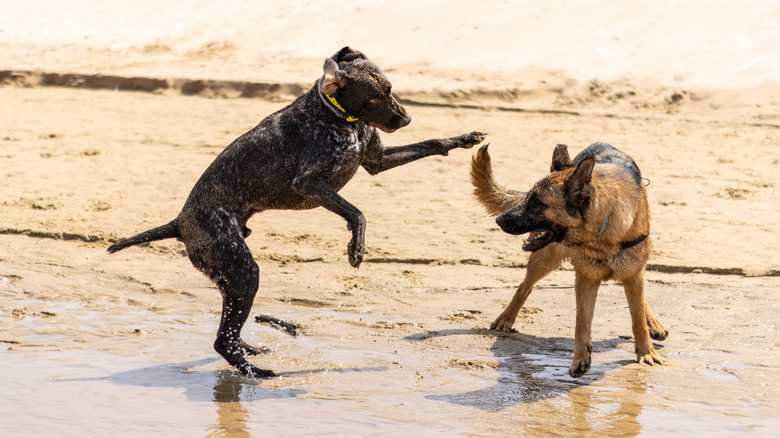
DogsDog BreedsThe Best Dog Breeds If You Live In A Hot ClimateByRosie GovinMarch 3, 2025 1:25 pm ESTPowerlightss/ShutterstockWe may receive a commission on purchases made from links.Have you ever seen a Siberian husky on a beach? This is not the beginning of some terrible joke, we swear! Huskies are extremely popular dogs these days, but if you live in a hot climate, they may not be the best choice of breed to adopt. The husky is just one breed that really shouldn't be out in the heat too long. Others include similar breeds like the Alaskan malamute and Akita, and brachycephalic dogs (aka pups with short snouts and flat faces) like boxers, English bulldogs, French bulldogs, and Pekingese. Their flat faces make it easier for them to overheat.If you love to soak up some rays with your pup by your side and you live in a place where temperatures creep up into the 80s, 90s, or 100-degree Fahrenheit range — don't fear. There are some dog breeds that thrive in hot weather. The maximum safe outdoor temperature for dogs really depends on your individual pup and their tolerance, but in general, you want to keep an eye on any dog and minimize time outside if it's climbing to 80 or 90 degrees Fahrenheit or above. That being said, here are five breeds that tend to be more than fair-weather friends — they're hot-weather friends!ChihuahuaAgos Listello/ShutterstockWhile there's some debate about the Chihuahua's country of origin, the breed most likely hails from Mexico, known for its warm climate. These little dogs also have thin coats, making them more comfortable in warm temperatures as opposed to the cold. In fact, they often need sweaters or extra cuddles when it gets a little too chilly for their liking.Short-haired Chihuahuas will generally do a bit better in the heat than the long-haired variety, for obvious reasons, but at less than 6 pounds, these pups tolerate the heat quite well overall compared to lots of other breeds. Chihuahuas get a bad rap for being territorial, yappy, and aggressive dogs, and it's true there are some reasons why Chihuahuas might not be the best dog breed to have around kids. However, these tiny pups have big personalities. They are extremely loyal, playful, and can be very affectionate as well.GreyhoundPaul Walder/ShutterstockFor similar reasons, the greyhound, whippet, and Italian greyhound are all great dog breeds to raise in locations with warmer climates. The best way to tell the difference between a whippet and an Italian greyhound and a greyhound is to observe their size. Greyhounds are the biggest, followed by whippets, and Italian greyhounds are the smallest of the three.All three breeds have very short, thin coats, slender bodies, and only small amounts of body fat. That's part of what makes them so speedy. These physical traits make them well-suited to being able to regulate their body temperatures in the heat. Like Chihuahuas, greyhounds especially can require layers to keep them warm in the cold weather, so they are actually more comfortable where it's warm.Believe it or not, these dogs actually don't need as much exercise as you think. Despite their reputations as racing dogs, greyhounds are quite happy to hang out on the couch. They do like to run, but they're sprinters, meaning they only require short exercise sessions each day. This is also a plus when it comes to the hot weather; you likely won't have to wrangle your greyhound and stop them from overexerting themselves when it's hot out.Australian cattle dogPurple Collar Pet Photography/Getty ImagesAustralia is known for its hot climate, so it stands to reason that the Australian cattle dog, a native of the area, does pretty well in sweltering temperatures. These muscular, energetic, and intelligent dogs are very at home working hard in the sunshine herding cattle or other livestock. These pups are extremely active dogs who require lots of time outside to run and play — or better yet, work. In order to be happy, healthy dogs, the Australian cattle dog requires some sort of job, whether it's herding cows, running with their owner, or completing agility courses. However, it's imperative to keep in mind that while Australian cattle dogs are at home in warm weather, they still need lots of water, breaks out of the sunshine every now and then, and could even benefit from some doggy sunscreen, like Bodhi's Dog Sunscreen Spray.That's right — sunscreen for dogs. Just as in humans, excessive sun exposure has risks for dogs that include sunburns and skin cancer. Hairless dog breeds like the Chinese crested or the Xoloitzcuintli are at a higher risk of sun damage, but any pup with thin coats or even exposed areas with very short or no hair, like the snout or the belly, can benefit from sunscreen protection. Just make sure to always use sunscreen specifically formulated for dogs.German shorthaired pointerEvgenia Glinskaia/Getty ImagesGerman shorthaired pointers are sporting dogs who are used to long days outside hunting with their owners. They are medium-sized, shorthaired dogs, as their name so helpfully points out, which makes it easier for them to withstand warmer climates. These dignified dogs also love swimming and are quite good at knowing when to cool off with a dip in the lake if they're getting too hot.In fact, German shorthaired pointers were bred for water retrieving, and their short, flat coat is water resistant, which makes it much easier for them to regulate their body temperature than many other breeds. They are extremely energetic pups, so if you live a mostly indoor life, the German shorthaired pointer is probably not the breed for you. They require lots of room to run and play, but as long as their exercise needs are met, German shorthaired pointers are very trainable dogs who love their families.Ibizan houndKristiinatammik/Getty ImagesThis breed might not be as well known as others on this list, but the Ibizan hound is a beautiful, warm-weather-loving dog that everyone should consider. These lanky, short or wire-haired pups were bred in Spain as rabbit hunters way back in the 700s. Nicknamed the Beezer, the Ibizan hound requires lots of daily exercise and loves to jump and play. Their prey instinct is strong due to their ancient rabbit-hunting jobs, so they should be kept on leash if they're not in a fenced-in area, and a tall fence at that, with their penchant for jumping.If you love to run, the Ibizan hound will happily join you on your jogs. They make great pets for families, are affectionate and friendly, and are used to the warm weather because of their origin on the islands off the coast of Spain. No matter what breed you choose, you can be sure these pups will enjoy some fun in warmer climates at your side — just keep plenty of water and sunscreen on-hand.
 Dog Breeds
The 12 Smelliest Dog Breeds (But We Love Them Anyway)
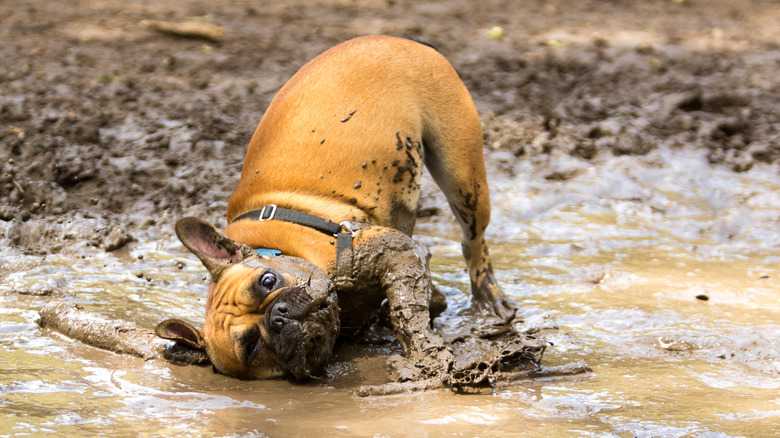
DogsDog BreedsThe 12 Smelliest Dog Breeds (But We Love Them Anyway)ByAdam SymchukFeb. 23, 2025 9:05 am ESTWill Rodrigues/ShutterstockWe may receive a commission on purchases made from links.Many pet parents love nothing more than cuddling up next to their furry companions. However, the unpleasant odors that often come with dogs can make it difficult to maintain the physical affection they seek. Canines emit a variety of smells with different potential meanings, including the infamous "Frito Feet," but some stenches grow so overpowering that you can notice them from a distance.Even the cleanest canine varieties can become rank without the proper care, while the most infamous stinkers can stay perfectly fresh and huggable with attentiveness towards their health. "Regular grooming, dental care and routine veterinary checkups are essential in maintaining a dog's overall well-being and minimizing odors," Dr. Kari Murdoch, DVM, shared with BeChewy. Of course, certain dog breeds are more prone to smelliness than others, whether because of known medical conditions or a high susceptibility to bacteria in their ears or skin folds. Thankfully, owners still find plenty of reasons to love them.1. Basset houndGoDog Photo/ShutterstockBasset hounds have an adorable look pet parents can't help but swoon over. Their long faces and ears have made their appearance iconic, with the breed inspiring the design behind Droopy Dog from MGM cartoons and "The Tom and Jerry Show." Yet, these little cuties can take on an odor because of these features, with skin fold and ear infections likely to occur without the right care routine. The breed also has a weather-resistant coat from its hunting days that can cause the active dogs to grow stinky when they work up a sweat and drool all over themselves.A basset hound does not need to be a smelly boy or girl. Daily brushing will help keep its coat fresh; unless it has recurring skin infections, the breed does not require regular baths. Additionally, cleaning their eyes and ears with products like Veterinary Formula Clinical Care Ear Therapy and HICC PET Eyes Wipes on a frequent basis helps prevent infections and the build-up of mucus. However, you should consult a professional if you believe an infection has already developed.Even when they smell, all basset hounds types make beloved companions. A relatively docile breed, these dogs need motivation to get going, but once they do, they overflow with personality and thrive at scent-related games. When properly socialized at a young age, the droopy-faced pups can get along great with other pets and children, making them ideal for a family living in an apartment, condo, or house.2. Bulldogharry plus harry/ShutterstockA bulldog's many skin folds can trap bacteria, making them stinky and possibly resulting in skin fold dermatitis, which can come with an even more intense odor and cause pain and other issues for the canine. Meanwhile, their droopy jowls may produce excess drool with an odor. The breed also faces a challenge many new owners don't know to account for: the "tail pocket," a small indent underneath the tail that can get infected and carry some nasty odors.Cleaning between the skin folds and targeted care for the tail pocket, including using products like Natural Dog Company Wrinkle Wipes, will help keep a bulldog itch and stench-free. "Skin fold dermatitis is a common problem in dogs with skin folds or pockets," shared Dr. Anke Hendricks in a 2022 study from the Royal Veterinary College. "Prevention or treatment of infection requires very frequent skin care or medication throughout a dog's life." Coat maintenance is also essential, with weekly or bi-monthly baths key. Make sure to dry the skin folds after bathing a bulldog to get rid of any moisture that can get trapped between them.Bulldogs have a reputation for laziness, but when given the proper motivation and exercise, these curious pups love exploring the world alongside their caretakers. The bulldog also makes a great companion for families of any size and lifestyle. Just be prepared for their overly affectionate nature towards their favorites.3. ChihuahuaWirestock Creators/ShutterstockThe mighty Chihuahua can give off a surprising amount of odor for a dog with such a miniscule body. While considered one of the healthiest breeds, these pups often experience teeth issues, with dental disease more prevalent than in other canines. Such problems stem from tartar buildup, along with teeth overcrowding due to their smaller head sizes. Halitosis, a sharp, pungent smell emitted from a dog's mouth, can develop without the proper care.Teeth overcrowding requires vet intervention, making regular check-ups essential for keeping your Chihuahua's mouth healthy. Pet parents can help prevent foul breath by regularly cleaning their dog's teeth. As daunting as it may seem, daily brushing is the best approach. A vet-recommended product like Virbac CET Enzymatic Toothpaste with a simple toothbrush can help prevent plaque build-up and the potential stench of halitosis.Stinky breath won't stop a canine lover from appreciating the Chihuahua's adorableness. A bundle of energy one moment and a lap dog the next, you'll rarely encounter a dull moment with one of these tiny warriors around. Its small size also makes the Chihuahua a convenient travel companion.4. Cocker spanielBojanstory/Getty ImagesCocker spaniels have a certain majestic quality that makes them popular show dogs, with their hair framing a wizened face with a long jaw and curly locks around their ears. Yet, they still can develop a host of potential smells. Their ears are prone to infection and need proper cleaning, and the breed also contends with a unique affliction, lip fold dermatitis, also known as "cocker mouth." The smelly condition results from a build-up of moisture and food in the beard and lower lip folds that breed bacteria.While daily toothbrushing can go a long way, consider using products like SmileDenX's Dog Dental Care Wipes to help wipe down the gums. Remain mindful of the severity of any lip fold dermatitis; if a cocker spaniel experiences excess discomfort, drool, or stench, a vet may recommend cheiloplasty surgery. Finally, a good brush at least once a week will help keep those long, luscious locks of hair from attracting an odor.A cocker spaniel can undoubtedly shine as a show dog, but the breed also makes a great pet. The adorable companion aims to please its owner, and training through positive reinforcement comes naturally. The laid-back temperament of the American or English cocker spaniel makes the doggo a wonderful roommate in an apartment or condo.5. Golden retrieverAli Peterson/ShutterstockThe golden retriever's high intelligence and trainability have made it a familiar on-screen presence. Yet, star power doesn't necessarily keep away foul odor. The dog's double coat can prove challenging for inexperienced owners to maintain, with the multiple layers of weather-resistant and thick fur trapping all sorts of smells as the canine goes about its day. Irritants in pet hair can also lead to scratching, making the retriever susceptible to pyoderma, a bacterial skin infection that gives off a rank smell.You can treat pyoderma at home, and the condition usually subsides in a couple of weeks without intervention; however, if it persists, you'll need to make a trip to the veterinarian. Bathing with products like Dr Teal's Unscented Epsom Salt and Veterinary Formula Itch Relief Medicated Shampoo can help soothe pyoderma symptoms. Golden retrievers shed a lot, so brushing every few days assists with controlling the mess, keeping their coats healthy, and allowing owners to look for signs of irritated skin.Despite issues with its coat, the golden retriever makes an ideal family dog thanks to its natural kindness. The breed prides itself on getting a head pat and often bonds with other animals, kids, and strangers. Those who live an active lifestyle also tend to fall in love with their new energetic running buddy.6. PugKolesker Anastasiia/ShutterstockPugs are one of the cutest small dog breeds in the world. However, despite their charms, these pups are notoriously stinky. While cleaning their skin folds will help prevent bacteria build-up and unwanted scents, you can't avoid one odor source: flatulence.The flat faces of pugs may be endearing, but the feature places them among the brachycephalic breeds, which means they inhale primarily through their mouths. Such air intake can result in a gassy dog, a condition pet parents can't do much about. However, paying attention to what you feed it and promoting an active lifestyle can help to work out all those farts and lessen potential foulness. "Ensuring your dog has a balanced diet will be key in reducing any gastrointestinal (GI) issues," Dr. Whitney Miller, DVM, MBA, DACVPM, advised Rover. You can try a gradual transition to an easily-digestible food with more high-quality protein.Regardless of the type of pug or pug mix, the breed is a bundle of joy, often happy and eager to please. The adorable little mouth-breathers love cuddling and splaying out on the couch but should still get moderate exercise. The breed is also famous, with Doug the Pug numbering among the wealthiest dogs ever.7. Saint BernardJan Hendrik/ShutterstockAs big doggos, Saint Bernards weigh between 120 and 180 pounds once fully grown. With such size can come a considerable stench, whether from rolling in something gross outside or their messy eating habits. Any pet parent with a Saint Bernard can tell you that when it comes to drinking water, you will get a drool trail following behind them. This excess of slobber stems in part from their working days when they used their saliva to help retrace their steps when performing rescues. However, it can create an unpleasant, smelly mess for a caretaker.If excess salivation or other concerns arise around a messy mouth, speak with your vet to identify any underlying issues. Otherwise, a Saint Bernard owner must embrace the drool and can help control the scent by properly cleaning a mess and drying off their dog's mouth after play. These pups don't need regular baths, but you should brush their coats a couple times a week to keep them from matting and trapping odors, switching to daily brushing during the shedding season. Tools like Flying Pawfect's Dog Slicker Brush are essential for owning a Saint Bernard.A true gentle giant, the Saint Bernard makes for a compassionate companion or a loyal worker. Drool need not be a deterrent for a pet parent, and some even embrace their slobbery nature. Online, you can find plenty of videos of owners showing off with pride how drooly their big boys and girls can be.8. Great DaneSabine Hagedorn/ShutterstockLooming tall amongst its peers, the great Dane can appear daunting with a standing height of over 3 feet. Despite its considerable size, the great Dane is not inherently stinky, with a coat that requires minimal maintenance and ears that, if kept clean, will likely remain free of bacterial infections. However, these majestic giants can clear a room quickly with the nasty gas common to the breed.Inflammatory bowel disease can cause a stink in any dog breed; however, your great Dane might be gassy for other reasons. Deep-chested breeds tend to toot more often, but the diet and speed with which large doggo eats can exasperate an existing issue. Knowing how much and often to feed a great Dane is essential for curbing nasty flatulence. You can achieve better gut health for a great Dane by avoiding budget food and aiming for a low-fiber and lower-fat feed. Grabbing a slow-feed dog bowl can also help a quick eater slow down; pet parents can find one to match their pooch's style among LE TAUCI's offerings.Great danes make great family dogs with the right training and early socialization. While they may seem intimidating, they belong to a kind and affectionate breed. They need space to stretch, and a couple of long walks a day are essential, but they are known to be chill and relaxed. This combination makes great Danes beloved companions for condo or apartment owners who want a large canine. However, they do best with access to a yard.9. Shar-peiAnika Hemmings/ShutterstockWith wrinkles on wrinkles and a large frame, few dogs are as instantly recognizable as the shar-pei. With all those folds come the required cleaning and maintenance to keep their coats fresh and avoid odors; they also tend to get a lot of ear conditions that necessitate diligent cleaning and maintenance to prevent bacteria build-up. However, even when kept clean, the shar-pei's unique combination of wrinkles and oily skin gives it a consistent, unique smell similar to chicken noodle soup that some consider unpleasant and others view as a lovable hallmark.On top of its natural odor, infections like skin fold dermatitis or pododermatitis can result in an irritated and pungent coat. Red, black, or patches of missing hair can all point to issues with a shar-pei's coat — if the smell doesn't give them away. By regularly checking between their skin folds, you can spot problems earlier, with bathing essential every one to two weeks for the wrinklier dogs. To ensure the proper management of skin conditions, a shar-pei may need an antibacterial/antifungal shampoo like Veterinary Formula Clinical Care Antiseptic and Antifungal Medicated Shampoo.The adorable wrinkles and expressive personality of the shar-pei are enough for most pet parents to overlook their potential smelliness. These canines are great for more experienced owners, as training and proper socialization are crucial for shar-peis. Yet, with the correct upbringing, the cutie make a good family pet or guard dog.10. Lhasa apsoF8grapher/Getty ImagesHas that mop just come to life, or is it a Lhasa apso? Lhasa apsos are dog show darlings, thanks in no small part to their long hair that sweeps the floor as they move. A pup this low down and hairy will pick up some smells wherever it goes. Yet, the breed faces other issues that can make it stinky, including a tendency to develop dental disease due to the dog's small size and ear infections. It is also prone to various skin conditions that can leave it itchy and foul smelling, including seborrhea, which causes flaky, oily, sore skin.Brushing multiple times a week to prevent mats and baths once or twice a month will help keep a Lhasa apso's luscious mane fresh. Opting for a regular groomer and a teddy bear cut can also make maintenance of scents picked up easier at home. Cleaning its ears and brushing its teeth will further help keep unwanted odors from bacteria or yeast from building up.While small, the Lhasa apso has 'big dog energy.' It thrives in a family environment and benefits from mentally stimulating activities. Watching the adorable little savants work through all the levels of a dog puzzle toy will make any pet parent forget about the challenges of removing the grit it may have picked up on a walk.11. NewfoundlandAnita Kot/Getty ImagesOften lovingly referred to as Newfies, Newfoundlands can weigh between 100 and 150 pounds. While size does not always guarantee the accumulation of more smells, the breed's coat, which gives it its iconic look, attracts plenty of odors. As a double-coated dog breed, owners won't want to shave their Newfie; instead, they'll need to rely on consistent cleaning and grooming to keep it fresh.Owners can bathe their Newfoundland every other week and should not put it off for more than four weeks. A big task, pet parents may want to schedule regular grooming to ensure the breed gets the proper bathing and drying. Beyond that, an omega-3 supplement can help maintain a healthier skin barrier underneath all that fur.Despite the size and massive amount of hair that come with Newfies, they tend to win over their owners. Smart, hardworking, and affectionate, these are some of the sweetest canines anyone will have the pleasure to meet. The Newfoundland's big body matches its big heart.12. Boston terrierotsphoto/ShutterstockThe Boston may have the most adorable look of all the types of terriers. Yet, with its flat face comes the expected problem of too much air intake, speed eating, or dietary issues working themselves out in the form of farts. The breed's oily skin also gives it a natural, slightly musky scent. Like most other dogs, the Boston terrier has a tendency to develop stinky feet caused by yeast buildup.To prevent foul flatulence, the Boston terrier's diet should consist of food that uses rice as the carbohydrate, avoid soy proteins, and not exceed 30% dry matter protein content in food, per VCA Canada Animal Hospitals. The breed only needs light brushing to maintain its coat, and baths only when necessary. Yeasty feet seldom merit concern without the presence of other skin conditions. However, pet parents can proactively keep this smell curbed by regularly cleaning and drying its feet and maintaining its hair and nails; introducing a probiotic treat into a balanced diet can also help stop stinky paws.A natural odor or Frito feet likely won't deter a caretaker from falling in love with a Boston terrier. They also have that terrier stubbornness, which many find a charming aspect of the breed. A clever canine known for bursts of energy, it makes for one entertaining companion.
 Dog Breeds
Chow Chow Puppy Looks Just Like A Real-Life Teddy Bear And We're Obsessed
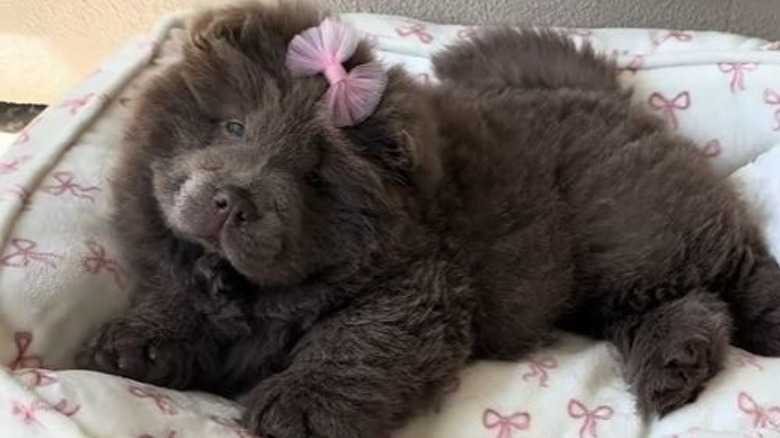
DogsDog BreedsChow Chow Puppy Looks Just Like A Real-Life Teddy Bear And We're ObsessedByMorrison ChanteshaOct. 15, 2025 9:25 am ESTshegracious / TikTokSome dogs seem almost too perfect to be real, their features so plush they blur the line between living animals and stuffed toys. A recently viral video on TikTok is making the rounds, showing a chow chow puppy that could easily be mistaken for a teddy bear. With a thick caramel coat, a round face, and tiny dark eyes, the resemblance is so strong that viewers can't help but do a double-take. The clip captures that sweet, adorable stage of puppyhood, and the result is pure magic. Watching the puppy waddle forward, fur bouncing with each step, feels like seeing a stuffed toy suddenly come to life.Part of the charm lies in the details of the chow chow breed: a compact build, the soft ruff of fur framing the face, and the button-like nose that peeks out from all that fluff resembles many teddy bears. These touches give chow chows their unmistakable look, from their rounded features in puppyhood to the blue tongue mystery that fascinates so many people as they grow. The video doesn't just show an adorable puppy; it taps into why this breed has become such a favorite online. Fans filled the comments with heart-eyed reactions, pointing out that it's almost impossible to believe this plush little creature is real.People love fluffy, adorable dogsnik174/ShutterstockChow chows have always stood out, long before they became social media sensations. Bred in northern China, they worked as loyal guard dogs, known for their quiet confidence and watchful nature. Their thick coats helped them endure cold weather, and the impressive mane gave them a profile that looked much like a lion's or bear's. It's that unusual mix of sturdiness and fluff that makes the breed's puppy stage so enchanting in videos. Of course, chow chows aren't alone in drawing comparisons to stuffed animals. Social feeds are filled with dogs so fluffy they could pass for little bears, from Pomeranians tucked into bags to Samoyeds bounding across snowy fields. These plush looks grab attention, but choosing a dog goes beyond appearance. The best matches often come from finding the right dog breed to match your personality, whether that means a reserved companion who enjoys calm routines or an active partner ready for daily adventures. The teddy bear puppy in the viral clip may win hearts with looks, but the real reward comes when that cuteness is paired with the loyalty and companionship that last well beyond puppyhood.
 Dog Breeds
French Bulldog Vs. Boston Terrier: How Do They Differ?
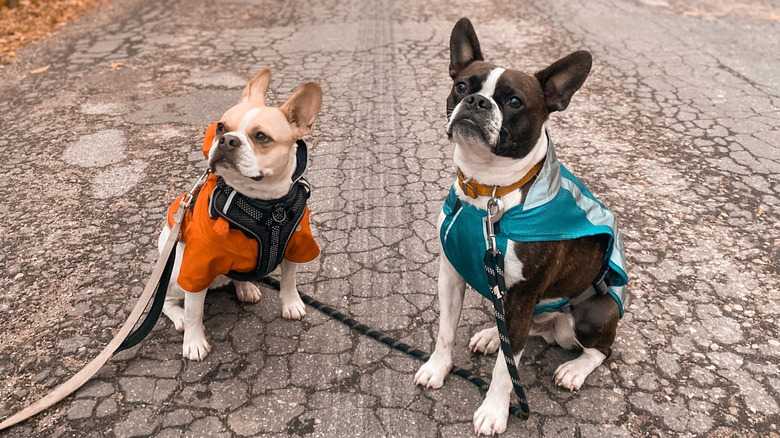
DogsDog BreedsFrench Bulldog Vs. Boston Terrier: How Do They Differ?ByCynthia AnayaMarch 2, 2025 1:25 pm ESTSamantha Burtt/ShutterstockCertain dog breeds are often mistaken for others because they look so much alike, including Boston terriers and French bulldogs — especially the black-and-white ones. They're both small breeds, they have erect ears, and their snouts appear similar. With these commonalities, it can be hard to tell them apart, especially from afar. However, a closer examination reveals several key physical and behavioral differences between these breeds. They differ in their facial appearance, their body and height, their coat and fur, their temperament, and their drooling level. The French bulldog and Boston terrier also have dissimilarities beyond the ones you can see. For instance, they have differing origin stories, as their names imply. Frenchies were popularized in France, and Boston terriers originated in the city of Boston. While both of these breeds can make great pets with their affectionate, friendly nature, you might prefer one over the other after learning more about their physical and behavioral differences.Facial differences between French bulldogs and Boston terriersotsphoto/ShutterstockAt first glance, everything from the neck up on a Boston terrier and French bulldog looks the same, but if you take a closer look, you'll notice some variations. One of the most obvious, with a side-by-side comparison, is the ears. Although both upright, the Frenchie's ears are slightly larger than the Boston terrier's. They're also more rounded at the top, giving them a bat-like appearance, while the terrier's (pictured above) are more pointed.A second difference involves the shape of the face and head. While both dogs are brachycephalic breeds (flat-nosed) with a frown-like appearance, the French bulldog's face sags a little more than the Boston terrier's, creating a more square-like face shape. The Frenchie's overall head shape is also more square-shaped than the terrier's. Another facial/cranial dissimilarity between these two breeds involves the presence of wrinkles in one breed, but not the other. Frenchies typically have facial folds near their snouts as well as wrinkled heads while the Boston terriers' faces and heads are smoother.Body and height differences between French bulldogs and Boston terriers© Jackie Bale/Getty ImagesBoth of these breeds can make great "lap dogs" that you can easily cuddle with and walk without worrying about getting pulled like you might with a large breed. However, one breed is slightly taller and heavier than the other. The average adult Frenchie stands about 12 inches tall and weighs anywhere between 16 and 28 pounds. The average Boston terrier is about an inch shorter, on average, when fully grown. It also weighs a few pounds less, reaching a maximum healthy weight of 12 to 25 pounds.Although only one inch separates the two breeds' height, the larger weight difference stems from their body types. Boston terriers, the lighter of the two, have leaner bodies than Frenchies. Frenchies, like the set in the photo above, tend to be noticeably stockier, more dense, and more muscular. Even if you never pick up either dog, you can determine their weight difference by their differing bone structure and muscular build.Coat and fur differences between French bulldogs and Boston terriersRebecca Nelson/Getty ImagesLike many other breeds, Frenchies and Boston terriers come in various colors. Purebred Frenchies can be born with one of 10 colors or color combinations, including brindle, brindle and white, all white, and cream. Although not accepted by the American Kennel Club (AKC) as a "breed standard," French bulldogs can also have black-and-white, all-black, and black and tan coats, among other colors. On the other hand, the AKC does consider black-and-white to be a breed standard color for purebred Boston terriers. Other breed-standard colors include black brindle and white, brindle and white, seal and white, and seal brindle and white.In addition to the varying coat colors, French bulldogs and Boston terriers have contrasting shedding levels. Both have smooth coats, but French bulldogs shed a little more than Boston terriers. If you happen to share your home with both breeds, expect to sweep up more of the Frenchie's fur, but there are always ways to minimize dog shedding for any breed.Temperament differences between French bulldogs and Boston terriersTom Werner/Getty ImagesIn addition to the aforementioned physical variations, these two breeds have contrasting personalities. The average Boston terrier is a little more energetic than the average French bulldog, so expect more running around, jumping, and playing from this breed. If you prefer a slightly less energetic dog, go with a Frenchie (pictured above). Terriers also bark a little more than Frenchies, but the overall barking level is relatively low, compared to other breeds.Their adaptability levels differ as well, but not all sources agree on which breed is the most stubborn. French bulldogs typically adapt well to change, which could be in the form of a new home, a new food brand, a new dog park, or a new dog-friendly outdoor activity. In contrast, Boston terriers tend to be less flexible and more resistant to change, however, some claim Frenchies are the ones that tend to be more obstinate. Ultimately, their personality will be up to the individual dog.Drooling level differences between French bulldogs and Boston terriersVeran36/ShutterstockDrooling isn't exactly a favorite trait of any dog breed. After all, it can be difficult to keep your house clean with a dog that drools, but both the French bulldog and Boston terrier drool, due to their facial anatomy. The Frenchie drools noticeably more than the Boston terrier, though. The Frenchie is considered a moderate drooler, however, the breed has been included in some top lists of dog breeds that drool the most. The Boston terrier is considered a very light drooler in contrast.The good news is that the drooling level of French bulldogs, though moderately excessive relative to their size, is not a deal breaker for many dog parents, based on the popularity of the breed. The French bulldog is one of the most popular around, toppling the previous most popular dog breed record holder. However, if you're on the fence about which breed to adopt, and you'd rather not deal with so much drooling, you might be happier with a Boston terrier. Drool aside, whatever breed you pick is sure to be a steadfast, loving, and loyal companion.
 Dog Breeds
Husky's Reaction To Being Teased With Her Toy Is Both Sad And Hilarious
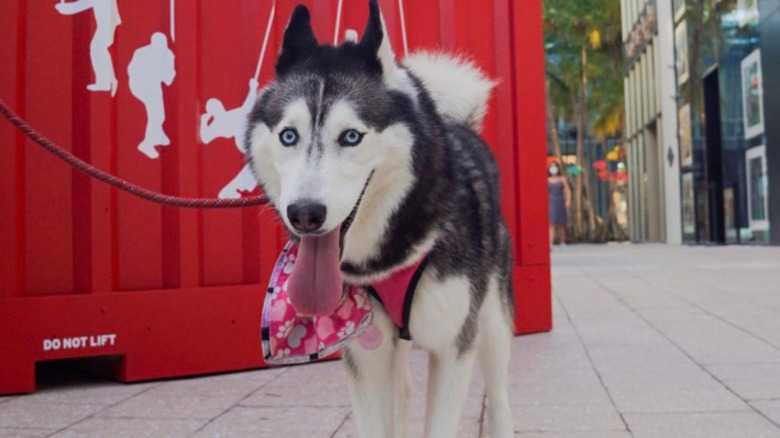
DogsDog BreedsHusky's Reaction To Being Teased With Her Toy Is Both Sad And HilariousByCynthia AnayaNov. 3, 2025 9:25 am ESTMeeka The Husky / FacebookHuskies are known for their striking blue eyes, thick coats, and wolf-like appearance, but those who have owned one know these dogs also love to "talk." Take Meeka the Siberian husky as an example. This internet-famous pooch has dozens of videos across multiple social media platforms showcasing her sassy personality coupled with various vocalizations. A September 2025 TikTok clip shows her lying on a bed while her dad teases her with a squeaky toy. She makes her frustrations clear with what her humans describe as "screaming" sounds of protest.The on-screen text indicates what Meeka is likely trying to communicate during the tease. "Just one bite. Almost got you. Bring it a little closer. You do it so fast. That's not fair," it reads. Viewers expressed their delight with the clip with heart and smiley face emojis. On Instagram, some also affectionately call her a drama queen, adorable, and a princess in response to the same clip. A few side with her by lightheartedly stating that her dad is being mean and should play fair. One fan says, "Meeka this teasing has to stop! Come live with me, and you will have a life filled with treatos and belly rubs!"Despite the playful teasing, other videos show that Meeka leads a truly pampered life filled with playtime, toys, grooming sessions, walks, cuddles, and kisses. She even gets birthday gifts and a cake, plus the occasional bouquet of roses, and yes, she talks her heart out in every clip. So, why do huskies vocalize so much anyway? Turns out, there are a few reasons.Why do Huskies vocalize so much?Meeka The Husky / FacebookThey're beautiful and loyal, but huskies can also be quite dramatic. They have a whole range of sounds, some of which may even sound like actual words. This vocal behavior stems from their sled-dog ancestry. Bred to live and work in close-knit packs, huskies developed strong communication skills to travel across long distances through snow and wind. They're highly social and intelligent as well, so they sometimes "talk back" when they get excited, irritated, or just want to bite their toy, like Meeka.Huskies also share a closer genetic link to wolves than many other dog breeds, and their signature howling is a clear nod to that wild heritage. Wolves howl to find their pack, claim their turf, or share how they're feeling. Various types of huskies do the same. While most husky pets aren't summoning any fellow sled dogs over 5 feet of snow in the Arctic, they're not shy about howling anyway. It's partially instinctual, sometimes amusing, and 100% husky.Instincts aren't the only reason that these dogs vocalize so much. Their expressive nature also plays a role in this behavior. Some huskies howl, whine, or make other noises because they're bored, seeking attention, or because it seems to make you happy. They're also among the most stubborn dogs and don't always feel like doing what you ask, so they might vocalize in defiance. Regardless of the reason, huskies like Meeka remind us that this breed is simply not suited for quiet living. Interested in more husky stories? Check out some husky facts for kids.
 Dog Breeds
Why Siberian Huskies Can Be Some Of The Toughest Dogs To Train
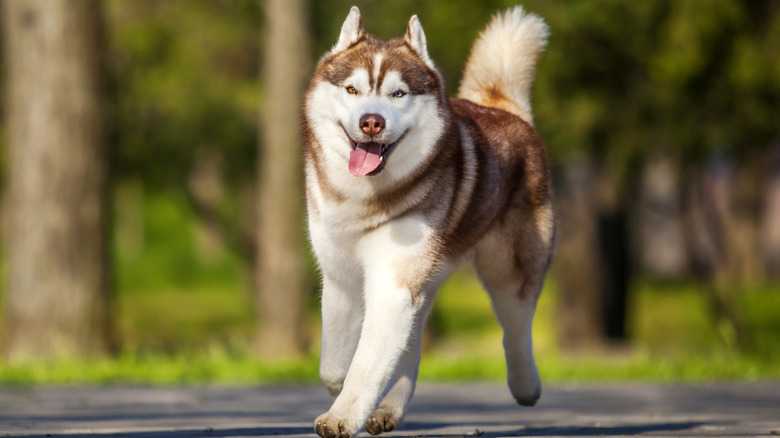
DogsDog BreedsWhy Siberian Huskies Can Be Some Of The Toughest Dogs To TrainByCynthia AnayaMarch 5, 2025 9:25 am ESTSbolotova/ShutterstockSiberian huskies are known for their thick coats, striking eyes, and sled-pulling abilities. Owners might also mention how vocal they are; they often bark, whine, and howl to communicate. Another one of the many facts about huskies is that they have a strong-willed nature. In fact, Siberian huskies are among the most stubborn dogs around. Their dogged determination, combined with their desire for independence and high intelligence, makes them one of the hardest breeds to train.Bradley Phifer, the executive director of the Certification Council for Professional Dog Trainers, spoke with Reader's Digest on the topic of husky training. "Huskies are notoriously independent and willful, making them resistant to training methods that other breeds may respond well to," he said. You've probably seen humorous videos on social media that confirm their refusal to do as they're told.Their intelligence is another factor that can make them tough to train. In terms of how effectively they communicate with humans, this breed ranks high on the intelligence scale. Intelligence doesn't necessarily equate to being easily trainable. In some cases, it means an intelligent dog may not be eager to please and will essentially choose to disobey an understood command. On a happier note, there are a few tips you can follow to make your husky more trainable.Tips to make your Siberian husky more trainableMaskaRad/ShutterstockAs with any other dog breed, the best time to start training them is when they're puppies, as early as 8 weeks of age. However, that doesn't necessarily mean that an older husky can't be trained, if you happen to adopt one that's over a year old. You'll just have to be more patient and more consistent. With consistency in mind, establish a training routine and stick with it so your dog will start to learn what to expect.Incorporating positive reinforcement training can also improve the overall learning experience for your husky, regardless of age. Have plenty of treats on hand and plenty of "good boy" or "good girl" praises to deliver. This can help motivate your husky to want to learn. Some dogs get excited about toys like they do with treats, so find your pup's favorite toy and use it as a means of positive reinforcement. Just be sure to use it strategically.A third tip to make your husky more trainable involves exercise. The Siberian husky is an athletic, energetic breed that likes to play and run around. This means if you decide to do a training session without first giving them time for physical activity, they might become antsy and distracted by their desire to play. Give them an exercise opportunity first, and then do the training. Combining all three tips, consistency, rewards, and exercise, can help make training your Siberian husky go a bit more smoothly — even if they're a bit stubborn about it.
 Dog Breeds
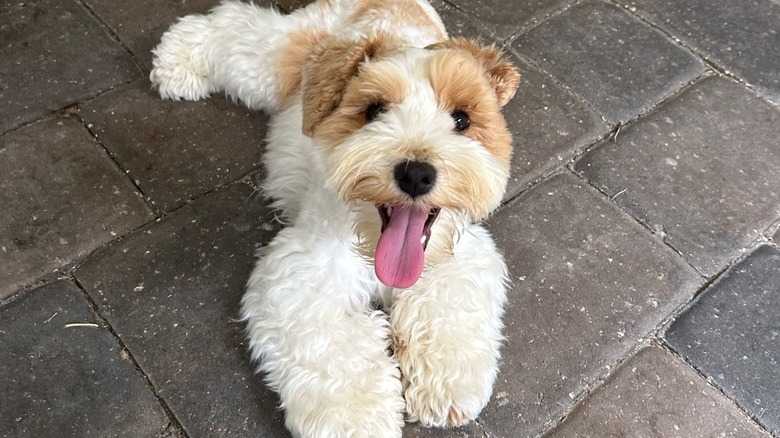
This Miniature Schnauzer Went Viral For The Most Adorable Reason
DogsDog BreedsThis Miniature Schnauzer Went Viral For The Most Adorable ReasonByAdam SymchukApril 24, 2025 9:25 am ESTalfie.and.fritz / InstagramWhile schnauzers come in various types and sizes, the miniature schnauzer remains the most popular in the United States, ranking 18th on the American Kennel Club's list of popularity in 2024. It's easy to see why: Beyond its adorable scruff, the smart dog breed is known for its high energy, intelligence, affectionate nature, charismatic personality, and adaptability that enable it to thrive in both apartments and open spaces. With its popularity and abundant charm, the breed is perfect for online sharing and potential virality. For one little guy named Fritz, popularity has come thanks to his appearance, which people say is straight out of a Pixar movie.Fritz's owner, who goes online as Mom, related in a TikTok post that this was not the only thing that her mini schnauzer got compared to. Many called him so cute that he must not be real, with some likening him to an adorable collectible like a Webkinz or a Build-A-Bear. Fritz and his equally cute brother, Alfie, have quickly built an online following, boasting more than 14,000 followers on TikTok and over 16,000 thousand on Instagram. Fritz's most popular post on TikTok has garnered over 2 million views.In an Instagram post where Fritz's mom posed the question "How are you even real??" fans were quick to share their love of the adorable pooch, with one user saying, "So adorable! That's what you call instant love.. that little face." Another commented on his unreal appearance, stating, "Oh my goodness! So adorable! Looks like a little stuffed animal!" Fritz has the looks to be a future high-earning celebrity pet, but like any miniature schnauzer, the love of a good home seems to be his greatest reward.What life with a miniature schnauzer is likeNatalia Bostan/ShutterstockMiniature schnauzers are known to be a very affectionate breed, and Fritz the viral pup is no exception. A TikTok shows him cuddling up with his mom in various positions, with the post reading, "I'm so glad my little guy likes to cuddle because how could I NOT hold him all day?" To confirm that it's not just for the camera, a Reddit thread discussing when users first noticed the cuddly tendencies of the breed garnered many responses. This included a user who commented, "From day one! Got him when he was an eight-week-old potato, and he's just always needed to snuggle. He's not clingy, just snuggly. Won't hear me complaining!"The breed can also be a long-term furry companion. The miniature schnauzer's lifespan ranges between 12 and 15 years, and it is generally considered a healthy breed. While they are prone to conditions (like any breed) including high cholesterol, cataracts, pancreatitis, and liver issues, they can experience long, happy, and healthy lives with their owners.Of course, it's not just cuddles; the intelligent breed can also get into mischief. Fritz loves stealing toilet paper when the bathroom door is left open and finding weird places to try to nestle himself into, like a toy chest or mixing bowl. Every dog is different, and every breed can be an adorable rabble-rouser or an affectionate hugger — sometimes both. Fritz certainly embodies the best traits of the mini schnauzer with his online virality, but any adopted dog deserves the love that comes with being the apple of an owner's eye.
 Dog Breeds
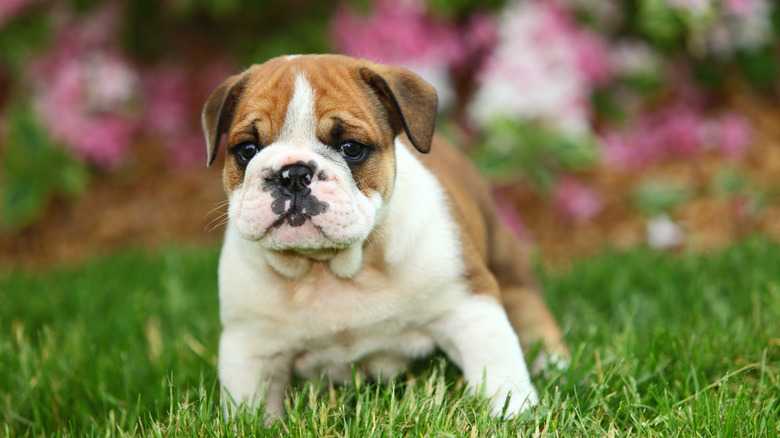
English Bulldog Puppy Teething Information
DogsDog BreedsEnglish Bulldog Puppy Teething InformationBySherri TelenkoUpdated: Dec. 10, 2024 5:59 pm ESTJlsnader/Getty ImagesWe may receive a commission on purchases made from links.Like all puppies, English bulldog puppies have baby teeth that fall out and are gradually replaced with adult teeth. Like human babies, puppies go through a teething stage. English bulldogs, like most bulldogs, start to lose their puppy teeth at around 12 weeks old, and some lose them earlier.Keep in mind that teething is painful for an English bulldog puppy, and your dog might try to ease that pain by chewing on your shoes, furniture, and whatever else he can get his paws on. Don't punish your dog for trying to relieve his discomfort while he's teething. Instead, you can stop an English bulldog from biting by redirecting their attention and giving them praise when they engage in productive behaviors. As their teeth start to come in, give them something suitable for chewing, like puppy teething toys. ENZZROA sells a 3 pack of Puppy Teething Toys specifically for small and medium dogs that includes rubber teething rings. American Kennel Club notes that it is important to stick with rubber toys that are somewhat soft, yet durable. You don't want them to break and have your puppy accidentally swallow or choke on the pieces.English bulldog teethCarol Yepes/Getty ImagesJust like other breeds of dogs, an English bulldog teeth diagram will show that adult dogs have a total of 42 teeth. Most puppies have 28 teeth at first, and the rest erupt in the following few months A puppy's teeth start to come in at 2 to 4 weeks old, probably before you've been introduced, and there's usually a full set of teeth by the time they are 5 to 6 weeks old.Like children, dogs lose their baby teeth when their adult teeth start to come in. This usually happens when a dog is 12 to 16 weeks old, and it can be a painful process. You might find a few on the floor, but that's not likely. Dogs, including English bulldogs, usually swallow their baby teeth. This is normal. By the time your puppy is 6 months old, there probably won't be any baby teeth left. Your dog's adult teeth are here to stay, hopefully for a long time.Redirect inappropriate chewingCarol Yepes/Getty ImagesRemember that teething is stressful and painful for puppies, including English bulldogs. Dogs, especially when teething, often cope by chewing. This is a perfectly normal way of self-soothing as long as they're chewing on a toy or teething ring and not your shoes, furniture, or other household items.If you catch your puppy chewing on something she shouldn't, don't punish her. She's just trying to make herself feel better. Instead, redirect her chewing to something that's meant for chewing, such as a puppy teething ring. Human baby teething rings are too soft. Also, frozen fruit or frozen broth cubes can help alleviate discomfort because it gives your puppy something to chew, and the cold can soothe inflammation.Develop a teeth-cleaning routineHanneke Vollbehr/Getty ImagesFortunately, the teething stage doesn't last long. After six months, all baby teeth should be gone; if they are not, a vet might have to remove them. Once your dog has all his adult teeth, the care is not over. Brush your dog's teeth every day to help prevent pain and illness. The best time to start an oral hygiene routine is when your bulldog puppy is teething. Many dogs don't like having their teeth brushed in the beginning, so patience is key.Select a comfortable place to brush your dog's teeth. Give him positive feedback as he gets more comfortable with having his teeth brushed. This is a new experience for your dog, so be patient and give him lots of praise. When your dog is willing to have his teeth brushed, keeping him healthy gets a lot easier.Brushing your dog's teeth is as important as brushing your own, but many dog owners neglect this important practice. When teeth get infected with bacteria, that bacteria can be absorbed into the bloodstream and can cause secondary infections in other parts of your dog's body. Dental and periodontal diseases are common in bulldogs, and it's often because dental hygiene is ignored. Remember that dental disease is painful for your dog, especially during mealtimes.
 Dog Breeds
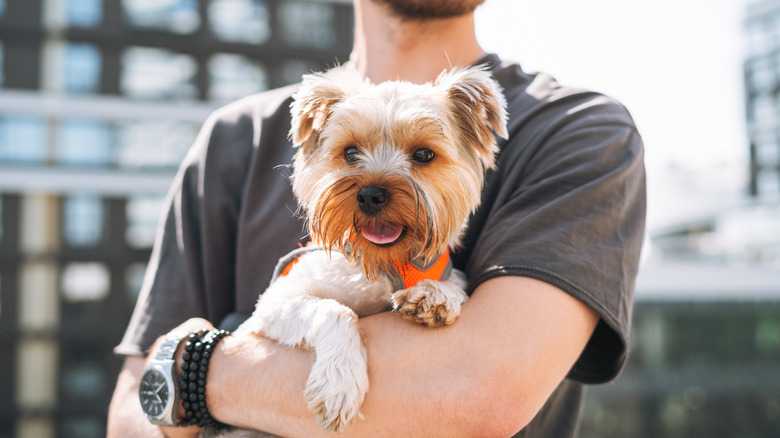
What Makes Yorkies Good Dogs For First-Time Pet Parents
DogsDog BreedsWhat Makes Yorkies Good Dogs For First-Time Pet ParentsByCynthia AnayaFeb. 5, 2025 11:08 am ESTGalina Zhigalova/Getty ImagesBeing a new dog parent can be an exciting time. You get to pick a cute name, play with your new furry friend, snuggle with them, laugh at the silly things they do, love on them, and receive their unconditional love in return. Before you do any of that, though, you have to first decide which specific dog to bring home. Unless you have certain characteristics you're seeking, consider the Yorkshire terrier. Yorkies can make great dogs for first-time pet parents because of their size, shedding level, affectionate nature, comfort level with children, friendliness, and protectiveness.Many experienced dog parents mention factors like finding a dog sitter, walking the dog, shedding, and jumping on people as some of the biggest pet peeves of dog ownership. These peeves are typically associated with a dog's breed and size. In many cases, the larger the breed, the longer the list of potential problems. The Yorkie, however, is one of the smallest dog breeds, and their added behavioral benefits help make them a great choice for someone who's never had a dog before.They're small and lightweightStefania Pelfini, La Waziya Photography/Getty ImagesThe Yorkshire terrier is a toy terrier breed that reaches a height of only about seven to eight inches when fully grown. They also max out at around seven pounds, so both adults and even most toddlers can easily pick one up without struggling. Their small size also makes them an easy dog to walk, unlike larger breeds that are strong enough to pull a human while leashed.Having a small breed like a Yorkie also gives you more flexibility with the places you can take your dog. For example, if you live in or will be moving to an apartment later down the road, most, if not all, apartment complexes have no restrictions regarding this breed. You can also easily carry a Yorkie in a purse or backpack if you're heading to a pet-friendly store like PetSmart or Petco, or doing a long day hike.Another benefit of the Yorkie's small size is that the overall costs of ownership are typically less than those associated with bigger breeds. Spaying or neutering costs are based on weight, along with many grooming rates, so the smaller the dog, the lower the price. Food is another expense. The smaller the dog, the less they eat, so you won't have to buy as much food as you would for a 70-pound lab for example.They don't shed (much)Olena Ruban/Getty ImagesMost dogs shed, leaving many owners having to sweep, vacuum, dust, and/or lint roll on a regular basis. Some have to sweep daily for heavy-shedding breeds like Siberian huskies and Saint Bernards. This might be an unwelcome, frustrating surprise for a new dog owner. In contrast, Yorkshire terriers don't shed much because of their coat type. Although they have long hair, they lack an undercoat, and their hair is smooth, so their shedding level is minimal.While some breeds leave chunks of fur and dozens of hair strands lying around your floors, you might notice only a few strands here and there from a Yorkie. Becoming a first-time pet parent to this breed can be the ideal way to ease into dog ownership. You'll have to deal with plenty of other responsibilities as a newbie, so you'll likely appreciate being able to eliminate the need for frequent shedding-related cleaning.One factor to keep in mind regarding Yorkshire terrier's coat, however, is the length. Although you won't have to worry about excessive shedding, their long, silky hair will require frequent upkeep, either in the form of combing, trimming, or both.They're very affectionateMarKord/ShutterstockIt's hard not to immediately fall in love with a Yorkie, with their cute little faces and mustached muzzles. Combine their adorable appearance with their desire to cuddle with you and be at your side, and they become even harder to resist. Most Yorkies are extra affectionate with their families.Whether you're watching TV on the sofa or hiding in your reading nook, expect your Yorkie to want to warm your lap. If you plan to co-sleep with your dog, they likely will not object. They may even want to snuggle up right next to you under the covers if you let them. Another option is to place their bed on the floor next to yours or give them a designated section of the bed with their own blankets.One thing to note about a Yorkie's affectionate nature is that they'll not only want to show you affection — they'll want your affection and attention in return. Affectionate and attention-seeking are both among the common traits of Yorkies. You can quickly become a Yorkie's best friend, but they might get so attached that they'll get jealous if you give someone else your attention. They're great with kidsIrina Belova/Getty ImagesOne thing to note about a loving dog is that this characteristic doesn't necessarily apply to all age groups for all breeds. For example, the Chihuahua is an affectionate breed, like the Yorkshire terrier, but these dogs tend to not do well in homes with young children. Yorkies, on the other hand, tend to be affectionate with the entire family, and are great with younger kids. If you've ever asked yourself, "What type of dog should I get if I have kids?," you can add the Yorkshire terrier to the top of your list of breeds to consider.Not all children know how to interact with dogs properly without being taught. Some may pull their hair or squeeze them in an attempt to show affection. Others may end up hitting their heads instead of gently petting them, or make them uncomfortable in other ways. These actions can upset a dog and cause them to snap, nip, or bite. Yorkies are generally not considered aggressive toward children, though, so you shouldn't have to worry about having a child around them.However, if your child has had little or no experience with dogs or small dogs, or if they've inadvertently mistreated dogs in the past, you may want to supervise them during the first interaction. You should also tell your child the do's and don'ts of handling a small dog because even kid-friendly breeds can become defensive if they're provoked enough.They're friendly with strangers, but protective at the same timeFotoDax/ShutterstockSome dogs are loyal and affectionate with their families, but with strangers, not so much. This isn't the case with Yorkshire terriers. This breed is typically open to meeting strangers, whether they enter your home as invited guests, or they encounter your dog at the park. As a first-time dog owner, you'll likely want only positive reactions between your Yorkie and new people.Although Yorkies are generally open to meeting strangers, they also make good watchdogs. They might be small, but they tend to be protective of their owners and their homes. That means if they sense a potential threat or hear a person or animal outside, they won't hesitate to let you know with their barking.Oftentimes, dogs can hear things that their parents can't, so having a Yorkie that can alert you when someone's at your door can be an added bonus for a new dog parent. They might even scare off porch pirates or other unwanted visitors at your front door. Yorkies might not be among the best protective dog breeds to help you feel safe because of their small size, but at least they can give you an audible warning that they sense something outside.
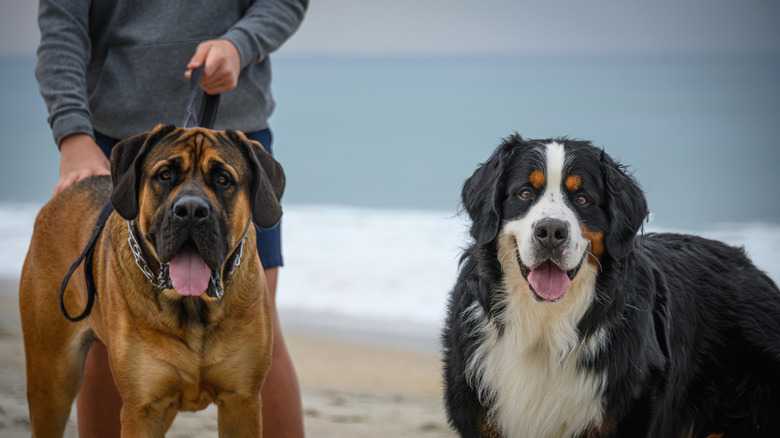 Dog Breeds
The Loyal, Intelligent Large Dog Breed You Must Train As A Puppy Or Risk Stubbornness Issues
DogsDog BreedsThe Loyal, Intelligent Large Dog Breed You Must Train As A Puppy Or Risk Stubbornness IssuesByMorrison ChanteshaSept. 12, 2025 9:25 am ESTDarwin Brandis/Getty ImagesBig or small, training is an important part of owning a dog. However, some breeds, especially the larger ones, may have a bit of a stubborn streak — such as the bullmastiff. Bullmastiffs are big dogs, no doubt about it. A full-grown bullmastiff can weigh about 120 pounds, and when you first meet one, the size alone can be a lot to take in. Spend a little time with them, though, and you'll see the other side: steady, affectionate, and happy to stick close to people. They're the kind of dog that will shadow you around the house and then flop down at your feet when you stop moving.Even so, raising one isn't something you should leave to chance. A bullmastiff puppy is quick to learn, but it's also quick to test limits. If you don't set boundaries early, it may decide for itself what's allowed and what's not, and undoing those habits later isn't much fun. Teaching simple commands and building routines while still young keeps that big body manageable and a strong will in check. Like many strong, protective breeds, bullmastiffs need structure in place before independence hardens into pushback.The history behind the bullmastiff's breed personalityNatalieshuttleworth/Getty ImagesWhile there is some variety in the breed, bullmastiffs were first bred in England to guard estates, holding intruders in place until a handler showed up. They weren't bred to chase or bite, but to use their size to block and pin, and that instinct hasn't disappeared. To this day, you might catch one parked by the front window or leaning in a doorway, watching the world outside as if it's still on duty.In a household, that watchful streak can be both comforting and a little tricky. Its bulk alone puts the breed among the best dog breeds for safety and home protection, since most strangers hesitate when they see a dog that size. Without early teaching, though, the guarding side can get a little too quick to react. A bullmastiff that hasn't learned the difference between the mail carrier and a real threat may treat both the same, and once it's grown, it's no small task to hold it back.The way around it is to start when your dog is still small, before the guarding side turns into defiance. Taking puppy training classes can help start the socialization process. As puppies meet neighbors, hear the doorbell without fuss, and watch everyday commotion, they realize not every sound requires a reaction.Training that keeps bullmastiffs steadyBullmastiff.dog / InstagramBullmastiffs may look imposing, but most thrive when their days include clear lessons and plenty of praise. In basic obedience, a bullmastiff can be a surprisingly quick study. Sit, down, and stay come naturally when the practice is short and upbeat, and the breed's eagerness to please shows through when treats or cheerful encouragement are involved. What can trip one up is long, repetitive drills, since its independent streak may cause it to check out if things feel boring.Programs that give structure with a sense of purpose bring out a bullmastiff's best side. Some owners enroll them in obedience clubs, where weekly classes keep both dog and trainer accountable. Others find that therapy programs suit them well, since a calm, gentle bullmastiff can offer comfort to hospital patients or schoolchildren. If you want a more active outlet, protection sports let them channel their guarding instinct in a safe, controlled way, pairing their natural strength with precise training.Day-to-day, it's the small lessons that prevent stubborn habits from setting in. A bullmastiff that learns to wait at a doorway doesn't barge ahead on walks. Also, a dog that practices recall in the yard is less likely to ignore commands when distractions pop up. Even holding still while the leash is clipped on teaches patience. These bits of self-control add up, shaping a dog that is not only easier to live with but also more confident and secure in every routine.
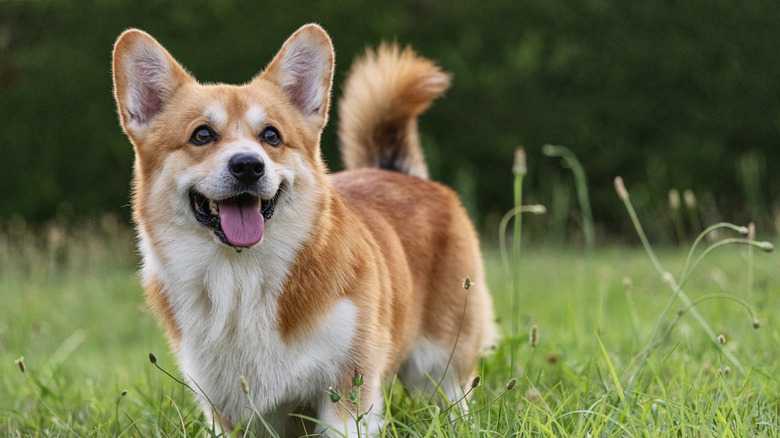 Dog Breeds
These 26 Corgi Mixes Prove The Best Things In Life Come In Small Packages
DogsDog BreedsThese 26 Corgi Mixes Prove The Best Things In Life Come In Small PackagesByRyan TronierUpdated: Dec. 9, 2024 12:53 pm ESTPiola666/Getty ImagesWith their big, pointy ears, short bodies, and wiggly butts, there's no denying corgis are one of the cutest animals in the world. Even better, they make great companions. These little doggies are known for being extremely smart and hardworking, having been originally bred to assist with herding. Today's corgis are better known for their loyalty and loving personalities.So what happens when you take those great qualities and combine them with other good dogs? You get some of the cutest pups you've ever seen. Dalmatian MixShadowBun / ImgurFabulous! We'll take 101.German Shepherd MixShadow BunThis German shepherd corgi looks happier than ever with their new haircut.Irish Setter MixShadow Bun / ImgurMost animals lovers point out that these corgi cross breeds look like normally-proportioned dogs but shorter.For the most part, these observations are correct. Corgis have cute, stubby legs because a) they're adorbs and b) they suffer from the same genetic condition known as achondroplastic dwarfism, according to Popular Science.Husky Mixsoupe_corgsky via InstagramBlue eyes never looked so precious.Rottweiler MixCherry GarciaLook at this adorable guard dog!Yellow Labrador MixMatt BelknapThere are two corgi breeds and both originate from Wales: the Pembrokeshire Welsh corgi and the Cardigan Welsh corgi, and, well, there are these gorgeous corgi mixesJack Russell Terrier MixWag via InstagramThe corgi's signature fluff meets the playful energy of the terrier. Shiba MixPhoonThe rare breed meets the British favorite with this adorable mix!Samoyed Mixnicolemcquarrie12 via InstagramThis floofball proves that a bit of red, white, and blue looks good any time of year.Pit Bull Terrier MixX (formerly known as Twitter)This Corgi mix is wondering if you've got a treat handy for them!Huntaway MixFarm Pon The HillLooks like someone is ready for playtime!Basset Hound MixMarissaCorgis are thought to descend from the short-legged Swedish Valhund and the spitz brought by Viking invaders and crossed with a local, but now extinct, type of dog known as the "turn-spit dog." These small dogs were harnessed to a spit that rotated meat over a fire. Cardigan Welsh corgis were named for Cardaginshire in Wales. All corgis were Cardigan Welsh corgis until 1934, when the Kennel Club of the UK decided that Pembrokeshire Welsh corgis were different enough to warrant being their own breed.Border Collie MixL.H.This corgi is ready for whatever adventure awaits.Chow Chow MixWagreg WaharriesWith its luxuriously long coat, this corgi mix is ideal for those who don't mind spending extra on grooming.Shitzu MixRebecca ThornbThis fluffball could use a snuggle.Shepherd MixImgurLook how happy they are to be outside!Chihuahua Mixpetrescuepilots via InstagramCorgis originally referred to as any short-legged dog that helped farmers round up and drive livestock to market. Over time, this type became two very similar breeds. The dogs have such short legs which make them small enough to not get kicked by cattle. The corgis would herd and drive cattle often by nipping at the cattle's heels. They were also small enough to hunt rats, even when the rats went into their burrows. Modern corgis still compete in herding competitions and dog sports like agility, but are mostly bred to be pets.Golden Retriever MixImgurAmerica's favorite dog is even cuter as a Corgi mix. Maltese MixImgurThis pup can hear everything you're saying.Sheltie MixImgurThis corgi mix is ready for the snow!Dachshund MixImgurWhy so serious?St. Bernard MixImgurCheck out those adorable teddy bear features.Blue Healer MixImgurWith a medium brown face and dark grey and charcoal body, this corgi mix could easily walk down a fashion runway.Whatever This Is Mix?adoteisenin via InstagramWe're not entirely sure of their pedigree, but we know for certain they don't mind some probiotics!Mermaid Mixcorgibaileyb via InstagramOkay, so maybe this pupper isn't a mermaid in real life, but they're so cute!
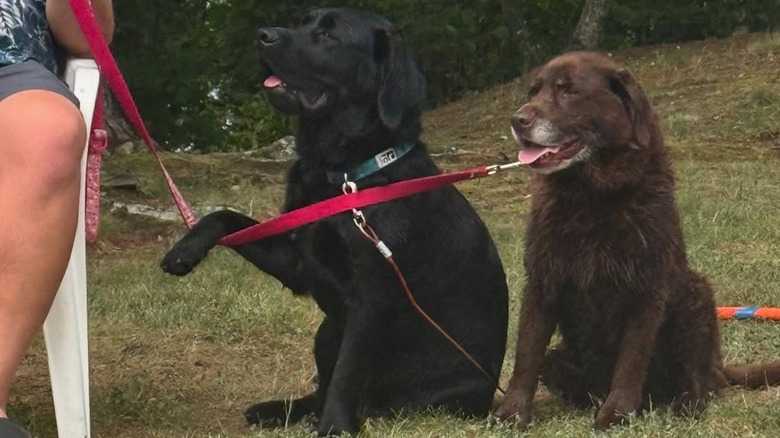 Dog Breeds
Your Heart Will Melt After Seeing This Black Labrador Puppy's 10-Month Transformation
DogsDog BreedsYour Heart Will Melt After Seeing This Black Labrador Puppy's 10-Month TransformationByMorrison ChanteshaUpdated: Sept. 26, 2025 2:57 pm ESTrubyandgordie / InstagramLife with a young puppy can feel like a blur, full of tiny moments that rush by faster than you expect. Hours are spent guiding it through new routines, and in what seems like no time at all, it's nearly grown. Gordie's family captured that rush perfectly in a TikTok video showing his journey from 2 months to 12 months old. At first, he's small enough to curl up on a single rug, gazing into the camera with wide, trusting eyes. By the final clip, the same rug looks tiny under his sturdy frame, a snapshot of just how fast a pup can grow in less than a year.Videos like Gordie's catch on because it plays to the same instincts that make before-and-after photos so compelling. Human brains are drawn to contrast, and nothing highlights change like a puppy beside its older self. The format also feels authentic — it's a slice of family life rather than a polished video production — which helps viewers feel drawn to it. For many, sharing these clips has become the pet version of a baby book, a way to celebrate milestones while connecting with others who are on the same journey.What Gordie's growth says about Labrador retrieversrubyandgordie / InstagramLabrador retrievers are known for dramatic growth in their first year, and Gordie's transformation is a perfect example of what to expect. Most Labs reach between 55 and 80 pounds and stand 21 to 25 inches tall by adulthood. By his first birthday, Gordie already fit that profile, even though Labradors continue developing muscle for another six to twelve months. That steady build will only make him stronger, showing how much change happens even after the puppy label fades.Such a sudden leap in size is simply part of the natural course of a large dog's life cycle. The puppy who once relied on soft meals and short naps grows into an active young adult with boundless energy. Along the way, hallmark traits of the breed appear — the broad chest, sturdy legs, and glossy black coat that fans recognize instantly. For pet parents curious about the indicators that a Labrador is purebred, those features stand out as classic signs.A change in size like Gordie's is more than a striking visual, as it marks a healthy body and shows that a once-tiny pup is growing exactly as expected. A Labrador that gains weight and muscle at this pace is thriving, ready for the long walks, games of fetch, and water play that the breed loves. Gordie may no longer fit the image of a tiny pup on the rug, but his first year marks the beginning of countless adventures with a healthy, full-grown companion.
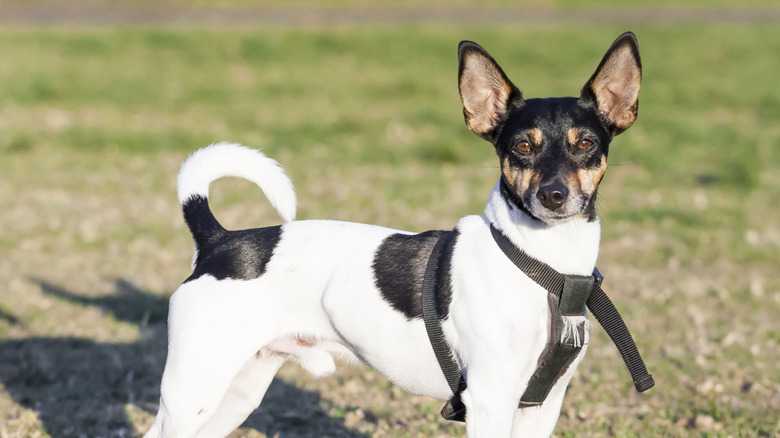 Dog Breeds
Taking Care Of A Rat Terrier Chihuahua Mix
DogsDog BreedsTaking Care Of A Rat Terrier Chihuahua MixByBarbara Bean-MellingerUpdated: Dec. 3, 2024 5:38 pm ESTsjallenphotography/iStock/Getty ImagesRatcha dogs, or rat-cha dogs, are a Chihuahua rat terrier mix. When acquiring a mixed breed dog, whether from a breeder or through adoption, it's sort of a mystery exactly what you're going to get. While this is somewhat true of any dog, it's certainly true of mixes because the offspring may take after one parent more than the other in appearance and temperament. To get an idea of how your dog's personality might develop or to make some sense of the puzzling things your dog does, it helps to look at the traits and temperaments of both parents; for a Chihuahua rat terrier mix, you need to learn about both Chihuahuas and rat terriers.Cherish the Chihuahua in your rat-chaChihuahuas are a breed recognized by the American Kennel Club (AKC) in the toy group, meaning they are tiny dogs. They are cherished by their owners for their charm, sass, intelligence, alert attitude, loyalty, and big personalities. Though they like lap time, they also are nearly always up for playing and sometimes a short walk, avoiding overexertion. Due to their small size, Chihuahuas don't do well in homes with small children who may be too rough with them. And if you take them outside in cold weather, they should wear a sweater to keep their tiny bodies warm.Angela Emanuelsson / EyeEm/EyeEm/GettyImagesChihuahuas are described as having an apple head or a deer head. The apple head is rounded like an apple, while the deer head makes the Chihuahua look like a little deer. They can have long or short coats in many colors and color mixes, and typically have bright eyes and erect ears. Chihuahuas are between 5 and 8 inches tall at the withers, which are the tops of the shoulder blades. Their bodies are off-square, meaning they measure slightly longer than their height. The key statistic for Chihuahuas is that they should weigh no more than 6 pounds. With proper care and nutrition, Chihuahuas can be expected to live between 14 and 16 years.Enjoy the rat terrier's loveable traitsRat terriers got their name from being raised to chase rats on farms, and their solid, muscular bodies can still give a good chase. They are very playful, too, and in spite of being one of the calmest terriers, rat terriers are still energetic dogs that need daily walks and exercise. A bit larger than Chihuahuas, even miniature rat terriers stand 10 to 13 inches high at the withers. They tend to weigh at least 10 pounds; standard rat terriers can weigh as much as 25 pounds, although a miniature would weigh closer to 15 pounds at most. With health care and good nutrition, rat terriers usually live between 12 and 18 years.These friendly, loveable dogs have smooth-haired, shiny coats that are pied, meaning that large patches of color are mixed with white. Intelligent, intuitive, and sensitive, rat terriers are fairly easy to train and like to please their owners, but can sometimes be stubborn. They are usually good with older children who have been taught to handle small dogs with care and like being part of a family, but they can be aloof with strangers. Rat terriers are not aggressive dogs, however.Unravel the mystery of your rat-cha dogWhile it cannot be predicted which genes and traits will be dominant in any rat-cha, they often have the face of a Chihuahua and the slightly larger size of a rat terrier. Rat-chas average 12 to 18 inches high and weigh an average of 12 to 15 pounds. To put it into perspective, that's at least twice the size of a Chihuahua in both weight and height. Rat-chas can have either erect or floppy ears and a short or long coat that sheds moderately. Keep their coats shiny and neat with weekly brushing and a monthly bath.RobertAx/iStock/GettyImagesRat-chas are affectionate, like both of their parents, but can be wary of strangers at first. They are usually a bit territorial, but since they need to learn to get along with other dogs, it's best to introduce them in neutral territory like an area of a park or dog park. Because of their still small size, rat-chas may not do well with large dogs. Being larger than Chihuahuas, they're usually good with children, but are still better with older children. They are bound to be intelligent, eager to please, and easy to train, except when that rat terrier stubbornness comes through.Obesity is an issue for all dogs and can severely affect their health and lifespan. For small dogs like rat-chas, owners must be judicious about not overfeeding. Along with giving the amount and type of food your veterinarian recommends, you need to also count the calories of any human food and treats you give. By keeping annual vet checkups and recommended vaccinations, following your vet's advice, providing daily exercise, and watching your rat-cha's weight, you can expect a rat-cha to live between 13 and 18 years.
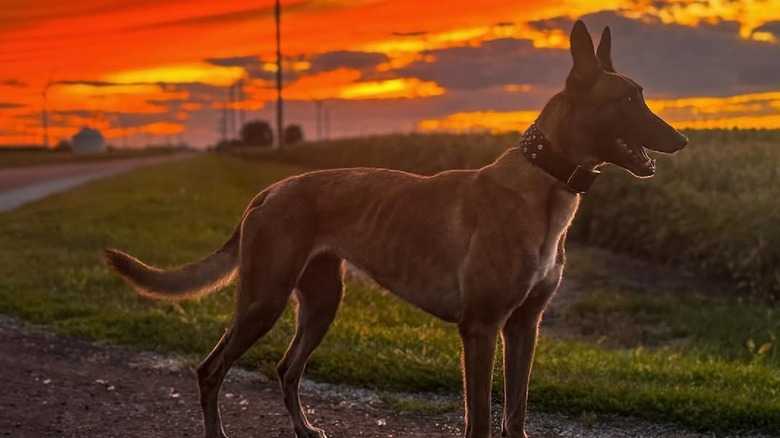 Dog Breeds
Blink And You'll Miss This Beautiful Rare Whippet Mix With A Need For Speed
DogsDog BreedsBlink And You'll Miss This Beautiful Rare Whippet Mix With A Need For SpeedByMorrison ChanteshaOct. 4, 2025 9:25 am ESTdiamondsportdogs / InstagramEvery dog loves to zip and zoom and have some fun, and this adorable whippet mix is no exception! Firefly has become a sensation for the way she moves across the ground like lightning. In a viral video, she launches into a sprint, quickly leaving her two running companions behind. Her stride is smooth, her energy looks endless, and before long, she's pushing speeds close to 40 miles per hour, per her owner's comments. Firefly can hold that pace, making her performance less of a sprint and more of a sustained run.Viewers were quick to compare Firefly to a racehorse, since they reach similar speeds. For people curious about just how fast dogs can run, she's a perfect example of the extremes. While the video highlights her incredible ability, the secret behind that performance lies in her breeding, a mix of whippet and Belgian Malinois, which is where the story really becomes fascinating.The breeds behind Firefly's speeddiamondsportdogs / InstagramFirefly isn't just another fast dog — she's the result of two canine breeds known for distinct strengths. The Belgian Malinois brings stamina, drive, and sharp athleticism that has made the breed a staple for police and military work. Speedy and sweet whippets, on the other hand, are slender sprinters designed for explosive acceleration, originally bred to chase game at top speed. Combining the Malinois' endurance with the Whippet's sprinting ability produces a dog capable of not only incredible quickness but also surprising staying power. That's why Firefly seems to glide past the point where other sighthounds would begin to fade.Owning a dog like Firefly also comes with its challenges. A Malinois–whippet mix is one that needs a lot of exercise and mental stimulation. Long runs, agility work, or tasks that keep her focused are essential, since both parent breeds are known for their high energy. Without enough outlets, that drive can turn into frustration, which is why dogs with her background often do best in active homes that can keep pace. Luckily for Firefly, she can race through the fields to her heart's content.